



Europe’s drive to semiconductor manufacturing sovereignty in current AI era has been challenging. Despite European Union has world-class semiconductor companies such as ASML for Lithography, IMEC for semiconductor research, likes of NXP, Infineon and STMicroelectronics for automotive, industrial and power semiconductors. Yet still Europe remains dependent on other players of the semiconductor value chain, specifically advanced manufacturing and chip design (Read more about semiconductor value chain).
In a panic to resolve the chip shortage of 2023, the EU proposed the EU chips Act 1.0. This Act 1.0 was copy playbook of the US chip Act. It failed to achieve significant results. Despite the EU mobilized significant public and private investment, there was a weak structural industrial policy.
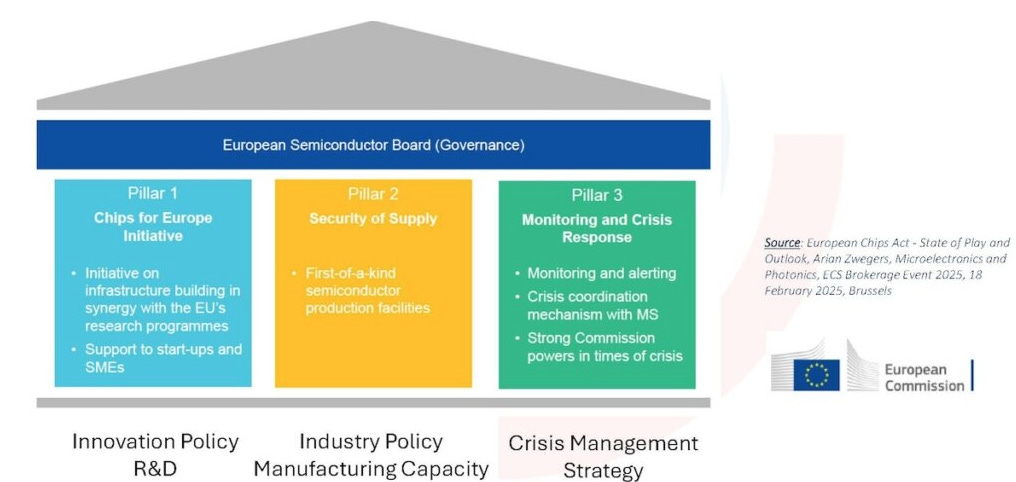
What was the governance problem with the EU chips Act 1.0?
The European Court of Auditors identified various weakness of the Act in their 2025 assessment. They identified structural flaws such as:
Unrealistic goal of reaching 20% market share of global semiconductor production by 2030. This is an improbable metric because global market share rapidly expands faster than European capacity. Market share alone is an imperfect measure of technological sovereignty.
Fragment at national level on how to execute the Act 1.0. The semiconductor investment depended on the Member States and private companies which lead to coordination challenges.
Demand Mismatch: Local industrial demand for advanced nodes (below 10nm) is low, while Europe’s globally competitive legacy chipmakers (like Infineon and STMicroelectronics) do not require mega-fab subsidies.
High Operational Burdens: Spiraling energy costs, high labor overhead, and strict regulatory red tape make Europe uncompetitive for high-volume manufacturing compared to Asia or the US.
The Act 1.0 address semiconductor as a monotonic industry which on contrary it is complex industry with value chain including:
Materials → Equipment → Design → IP → Fabrication → Packaging → Testing → System integration.
Europe can not dominate every stage. Hence Europe needs to understand which dependencies are strategically important and where it has genuine competitive advantages. This is what the Act 2.0 aims to achieve on the semiconductor supply based on the competitive advantages of Europe in value chain of the semiconductor.
The gap that the Chips Act 2.0 promises to fulfill.
Summertime June 2026, the European Commission proposed Chips Act 2.0 as part of Technological Sovereignty Package which emphasis on increasing semiconductor ecosystem.
There are 5 major reforms:
Shift from supply side to demand side: The Act 1.0 focused heavily on building semiconductor capacity. The Act 2.0 introduces Demand Accelerators which basically connects chip manufacturers directly to downstream industry players such as telecommunications, automotive, defense, and mobility. This makes the semiconductor ecosystem sustainable when:
research → prototype → customer → production → scale
rather than:
research → subsidy → project → subsidy.
Expanding funds throughout the entire value chain: Chips Acts 2.0 proposes State funds the entire semiconductor value chain from raw material to manufacturing equipment, advanced packaging. This is aims to fix the surrounding structural components because a fab cannot operate independently.
Fast tracking administration: The new chip act proposes a maximum 12 months period for permit approvals for strategic semiconductor facilities, forcing Member States to fast-track administrative and environmental procedures.
AI & Cloud frameworks: The 2.0 framework focuses on a broader technology strategy, which includes Cloud and AI Development Act (CADA) which provides a complete European Technological Sovereignty Package. This directly answers 2024 Draghi Report which reveals that Europe relies on non-EU providers for 80% of it’s digital infrastructure, cloud services and advanced tech.
Semiconductor is the foundation of:
AI → data centers → cloud → networking → industrial automation → robotics.
Centralized Fund Governance: EU established a centralized budget pool of at least €20 billion1 in Multiannual Financial framework from 2028-2034. This centralized budget is intended to attract larger private investment and show that EU means business.
Lessons gained is that strategic industrial policy requires measurable objectives, and clear responsibilities that targets all sections of the value chain. In other ways, semiconductor capacity created; leading to strategic dependencies reduction.
We are not saying that EU will be the next Taiwan with its own TSMC. The EU does not need to manufacture every semiconductor it needs. Instead, EU is showing that it will rely on its core strength when it comes advanced manufacturing tool with the likes of ASML ‘s lithograph but it will also strategically diversify and protect its technology sovereignty.
Why investors should care?
In our view for long-term investors, this is an opportunity window because this semiconductors 2.0 act policy is multi-year structural demand driver, rather than a short-term response to a chip shortage.
If Chips Act 2.0 successfully connects European research, capital, manufacturing and downstream demand, it could strengthen the competitive position of companies across the European semiconductor ecosystem from equipment and materials to automotive, industrial and AI-related technologies.
More importantly, the policy direction provides investors with greater visibility into where Europe intends to allocate capital and build strategic capacity. I personally have seen new construction of manufacturing of advanced Indium Phosphide (InP) photonic chips at a 6-inch wafer in my hometown Eindhoven, The Netherlands.
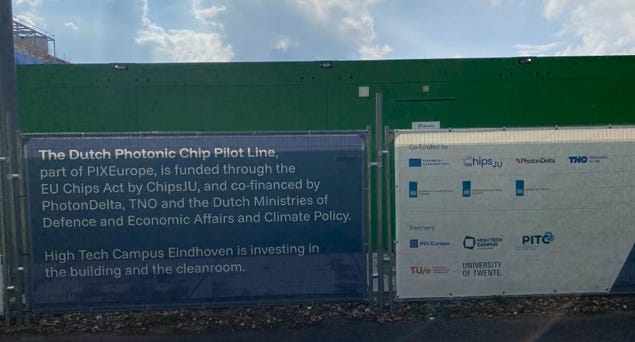

There is a new wave of strategic technology sovereignty blowing through Europe. Europe is moving from a reactive subsidy framework toward a more coordinated attempt to build an investable technology ecosystem. For long-term investors, that distinction matters.
The central story is simple:
Europe does not need to become self-sufficient in every semiconductor. It needs to become strategically indispensable in the technologies that matter—and resilient where dependencies create genuine risk.
A note on this collaboration: this breakdown was co-written with Gidion from Behind The Chip, a Substack publication dedicated to exploring the people, physics, and principles behind semiconductor innovation. His knowledge of the industry’s technical depth made this article better. If you want to understand what’s happening inside the machines that power this supply chain — not just the economics — his newsletter is the right place to go. Subscribe at behindthechip.substack.com.
Try the BE Invested Labs platform: beinvestedlabs.com
Subscribe to BE Invested Labs for more industry breakdowns, company research, bull and bear cases, valuation notes, and AI audio briefings.
— Buyce & Emmanuel, BE Invested Labs
Disclaimers & Disclosures
AI Transparency BE Invested Labs uses AI to aggregate financial data and format reports. The AI structures the information. Users determine their own investment thesis, risk management, and market outlook. We audit system outputs to reduce AI errors. We use these exact reports to manage our own capital.
Legal Disclaimer This platform provides educational and informational content. BE Invested Labs is not a registered investment adviser and does not provide financial, investment, tax, or legal advice. Nothing in this article is a recommendation to buy, sell, or hold any security. Investors should do their own research and consult a qualified professional before making investment decisions.